India, also known as the Republic of India is a country in South Asia. It is the seventh largest country by area and with more than 1.3 billion people, it is the second most populous country as well as the most populous democracy in the world. Bounded by the Indian Ocean on the south, the Arabian Sea on the southwest, and the Bay of Bengal on the southeast, it shares land borders with Pakistan to the west; China, Nepal, and Bhutan to the northeast; and Bangladesh and Myanmar to the east. In the Indian Ocean, India is in the vicinity of Sri Lanka and the Maldives, while its Andaman and Nicobar Islands share a maritime border with Thailand and Indonesia.
The Indian subcontinent was home to the urban Indus Valley Civilisation of the 3rd millennium BCE. In the following millennium, the oldest scriptures associated with Hinduism began to be composed. Social stratification, based on caste, emerged in the first millennium BCE, and Buddhism and Jainism arose. Early political consolidations took place under the Maurya and Gupta empires; later peninsular Middle Kingdoms influenced cultures as far as Southeast Asia. In the medieval era, Judaism, Zoroastrianism, Christianity, and Islam arrived, and Sikhism emerged, all adding to the region's diverse culture. Much of the north fell to the Delhi Sultanate; the south was united under the Vijayanagara Empire. The economy expanded in the 17th century in the Mughal Empire. In the mid-18th century, the subcontinent came under British East India Company rule, and in the mid-19th under British Crown rule. A nationalist movement emerged in the late 19th century, which later, under Mahatma Gandhi, was noted for nonviolent resistance and led to India's independence in 1947.
India is a beautiful and fascinating country that is always challenging and often surprising. It capped peaks of Himalayan mountains. Visiting India is an assault on the senses, sights, sounds, smells and sensations are all experienced at maximum intensity. By the end of first week, the noise and chaos seems like an ordinary life.
India is one of the world's great melting pots, where an incredible diversity of cultures, religions and ethnicities live in surprising harmony. Presided over by an extraordinary array of gods and deities, one-sixth of the planet's population can be found here, living in anything from high-rise apartments and inner city shantytowns, to simple huts in remote villages where life has hardly changed in centuries.
You could spend a lifetime exploring the relics left behind by ancient empires and the country's dramatic landscapes, which range from tiger-filled jungles to frozen Himalayan deserts. On the first trip, almost everyone finds time for the so-called Golden Triangle, zipping from the colonial capital, Delhi, to the Taj Mahal at Agra, then on to Jaipur, the colourful capital of Rajasthan. With more time to spare, you can discover 36 UNESCO-listed sights, from creaking mountain railways and ancient fortresses to mangrove forests and temples overflowing with multi-armed deities.
Some of the key facts about India are :
| India, with an area of 32,87,263 sq.km. is the seventh largest country in the world. |
| The countries which are larger than India (in area) are Russia, Canada, China, USA, Brazil and Australia. |
| India has a land frontier of about 15,200 km and a coastline of 7516.6 km. A ratio of approximately 2 : 1 |
| Among the Indian states, Gujarat has the longest coastline of approximately 1600 km. |
| The southernmost point of Indian mainland is Kanyakumari. Indira Point which is the southernmost point of India was submerged in the 2004 Tsunami. |
| The countries which have a common border with India are Pakistan, Afghanistan, China, Nepal, Bhutan, Myanmar and Bangladesh. |
| India shares the longest border with Bangladesh (4,000 km appx). |
| The nearest country with which India does not share a border is Sri Lankawhich is separated from India by a narrow channel of sea formed by Palk Strait on one side and Gulf of Mannar on the other. |
| India’s population as on 1 March 2011 stood at 1,21,05,69,573 (62,31,21,843 males and 58,74,47,730 females). |
| India accounts for a meagre 2.4 per cent of the world surface area of 135.79 million sq km. Yet, it supports and sustains a whopping 16.7 per cent of the world population.. |
| The sex ratio is 943 females per 1000 males. |
| The overall literacy rate is 74.04% (82.14 for males and 65.46 for females). |
| Three most populous countries of the world viz. China (1.34 billion), India (1.21 billion) and USA (308.7 million) account for 40% population of the world. |
| The census moment, the referral time at which the snapshot of the population is taken was 00.00 hours of 1 March 2001. Until the 1991 Census, the sunrise of 1 March was taken to be the census moment. |
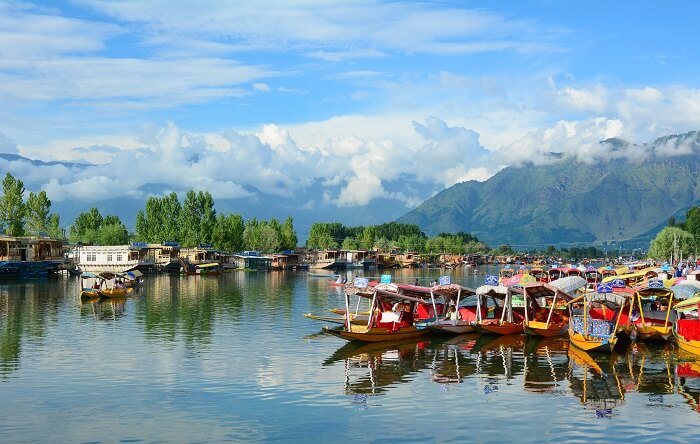 Are you planning for a surprise vacation for your family during this summer? Then you should consider Srinagar to be on the top of the list. See below more details about this excellent holiday destination..
